
From Policy to Practice: BIR and SwissCham Forge Partnership on Tax Reform
At the Policy-to-Practice Roundtable hosted by the Swiss Chamber of Commerce of the Philippines, together with SGV & Co., the Bureau of Internal Revenue (BIR) and the Swiss Chamber of Commerce of the Philippines (SwissCham), the answer begins with stronger collaboration. On 24 June 2026, both institutions marked a milestone with the signing of a Memorandum of Understanding (MOU) between BIR Commissioner Atty. Charlito Martin Mendoza and SwissCham Chairperson Mr. Felix Fiechter, establishing a platform for sustained cooperation on tax administration reform, digital transformation, and taxpayer service.
The agreement builds on SwissCham’s induction into the BIR’s Partnership with the Multi-Sectoral Group (BIR-PMSG) just a day prior, reflecting a shared commitment to a more transparent, efficient, and business-friendly tax environment. At the core of this effort is digital transformation — seen as key to improving compliance, streamlining processes, and enhancing the overall taxpayer experience.

In his opening remarks, Mr. Fiechter emphasized that reform does not end with alignment on priorities, but with consistent implementation that businesses can trust. Representing Switzerland — the Philippines’ fifth-largest foreign investor — he underscored the importance of sustained dialogue in maintaining investor confidence. This was echoed by Mr. Hans-Christian Baumann, Deputy Head of Mission of the Embassy of Switzerland, who highlighted predictability and transparency as critical to investment decisions.
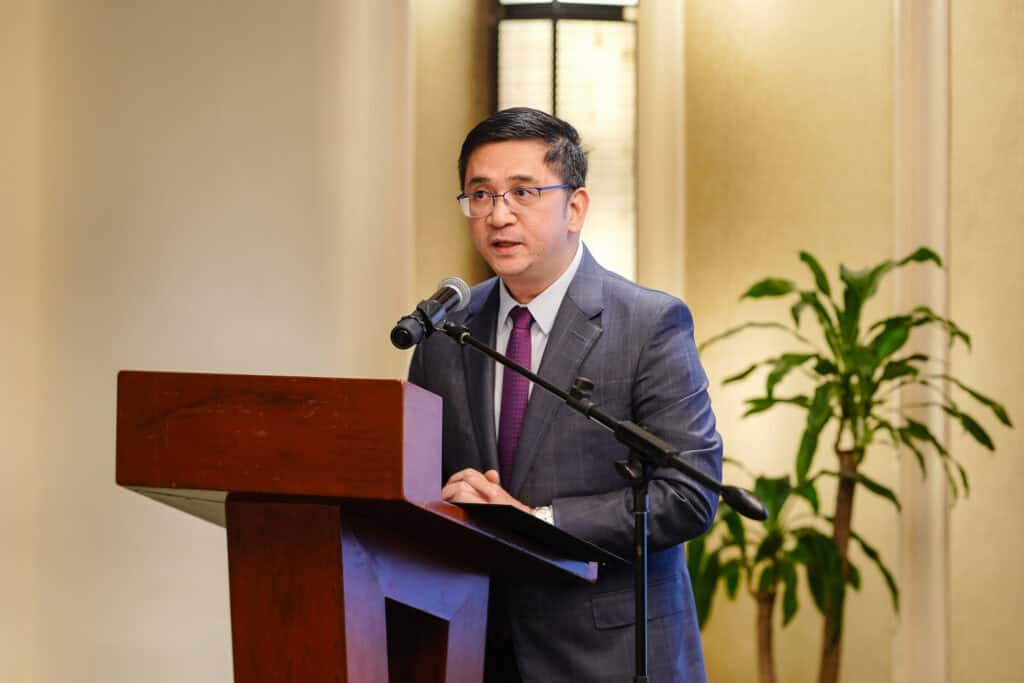
Six months into the BIR’s DARES reform agenda, Commissioner Mendoza framed progress through three outcomes that taxpayers directly experience: predictability, ease, and impact.
On predictability, he pointed to audit reforms such as one Letter of Authority per taxable year, a taxpayer-per-taxable-year policy, and the introduction of the LOA Verifier.
“Audit and assessment should be about fairness, not fear.”
Addressing a long-standing concern among businesses, Mendoza emphasized that reforms aim to ensure audits are targeted and proportionate — focusing on genuine non-compliance rather than creating unnecessary burden for compliant taxpayers. At the same time, the BIR continues to strengthen enforcement against illicit trade and tax evasion, while preparing for emerging frameworks such as the proposed Qualified Domestic Minimum Top-Up Tax and Real Property Valuation and Assessment Reform Act.
On ease, digital initiatives — including the Digital TIN, QR-enabled Certificates of Registration, and the Large Taxpayers Service Taxpayer Portal — signal a shift toward simpler, more efficient processes, alongside reforms that streamline business closure.
On impact, tax policy is increasingly linked to broader development goals, from expanding VAT-exempt medicines to supporting green energy, housing, and education. These efforts are reinforced by strong fiscal performance, with ₱1.434 trillion in collections from January to May 2026, exceeding targets, and improved rankings in complaint reduction.
Discussions with the private sector highlighted both progress and remaining challenges, particularly around audit processes, e-invoicing timelines, and data privacy alignment. In response, BIR officials pointed to ongoing reforms, including a transition to risk-based audit selection, non-intrusive digital systems, and targeted relief measures such as the ₱5,000 tax abatement program for micro-taxpayers.


As the Philippines navigates evolving economic demands, initiatives like the BIR–SwissCham partnership underscore the importance of sustained public–private collaboration. Ultimately, the success of tax reform will depend not only on sound policy, but on consistent implementation — building a system that enables compliance, supports business growth, and strengthens trust in the country’s fiscal environment.
